Web Services
Steffen Uhlig
Einführung und Überblick
Elevator Pitch
Worum geht es in diesem Kurs?
Wie baut und betreibt man heute Web-Applikationen?
Themen
- {Infrastruktur, Platform, Software} as a Service
- Technologien
- Virtuelle Machinen: Vagrant + Virtual Box
- Containers: Docker
- PaaS: Cloud Foundry (IBM Cloud)
- Serverless (Functions as a Service): OpenWhisk
- Application Design Patterns: Microservices, Monolith, Service Discovery
Themen (2)
- Markup:
JSON,YAML(auch Tools) - Configuration Management (Ansible)
- Continuous Integration
- Protokolle: HTTP, REST (
curl,jq) - Infrastructure as Code: evtl. Terraform,
BOSH
1.-3. Vorlesungstag
- 180 min Vorlesung
- 90 min Übung
- Experiment: Pomodoro Technique
2.times:
  3.times:
    25 Min Vorlesung
    5 min Pause
  10 min Pause
4. Vorlesungstag
- 90 min Vorlesung (Pomodoro)
- ab 15:45 Abnahme der Belegarbeit
- 15 min / Team
- Näheres in der zweiten Vorlesung
Regeln
Offiziell:
- Anwesenheitspflicht (~liste)
Meine Interpretation
Mit der erfolgreichen Präsentation der Belegarbeit weisen Sie nach, dass sie den Kurs absolviert haben.
Interaktion
Während der Vorlesung
- Am besten immer sofort fragen
- Umfragen mit Pingo
- Teilnahme ist freiwillig
- Sie benötigen Computer oder Smartphone mit Internet-Zugang
Interaktion
Nach der Vorlesung
- eMail: s@uhlig.it
- Signal
- Threema
Skript
ws.uhlig.it
Fehler in den Folien?
- Die Vorlesung ist noch jung
- Fehlermeldungen willkommen
Übungen
- Selbständiges Anwenden und Vertiefen der Vorlesungsinhalte
- Keine formale Kontrolle
- Erfahrungswert: Absolvieren der Übungen erhöht Chancen auf Testat 😆
Kennenlernen
Steffen Uhlig

Geboren 1970 in Chemnitz

Chemnitz?

Bild: André Karwath
Verheiratet, 2 Kinder

Studium in Mittweida…

…und Aberdeen (Scotland)

Quelle: Alexrk2

IBM Research & Development

Quelle: GeRanD

Job: IBM Cloud
IBM Cloud (seit 2014) 
Interessen
#ruby,#golang#pair-programming#unix
Und jetzt Sie:
Folgende Technologien kenne ich bereits:
https://pingo.coactum.de/593295
Kontext
Moderne Geschäftsanforderungen
- Agilität
- Daten über alles
- Rigorose Kosten / Nutzen Analyse => Skalierbarkeit
Beispiel
- Globales Logistik-Unternehmen
- Senkung der Wartungs- und Instandhaltungskosten = Wettbewerbsvorteil
- Idee: Vorausschauende Wartung (“predictive maintenance”)
Liebes ChatGPT, wann wird mein Kühlschrank voraussichtlich kaputt gehen?
Umsetzung?
- Größenordnung des Erfolgs ist nicht sicher
abschätzbar
- Iteratives Vorgehen
- Lösung muss skalierbar sein
- Schnelle Umsetzung / Scheitern ist entscheidend
- Und das mit der eigenen IT-Abteilung, die allein 6 Monate für die Anschaffung eines Servers benötigt?
Antworten aus der (Technik-)Geschichte
Telefon
 |
 |


Automobilbau
 |
 |


Banken
 |
 |
Bilder:


Gemeinsamkeiten?
- Virtualisierung
- Automatisierung
- Standardisierung
=> “Service Management”
Gibt es ein Problem?
- Software wird seit ~70 Jahren produziert
- Immer noch:
- dauert die Entwicklung länger als gedacht und
- kostet mehr als erwartet;
- die Software leistet oft das falsche und hat
- Fehler, und ist meist
- schwer zu warten und zu ändern
Softwarekrise
Gründe für die Softwarekrise?
https://pingo.coactum.de/593295
Mögliche Ursachen
Conways Law:
Organizations which design systems … are constrained to produce designs which are copies of the communication structures of these organizations.
Melvin Conway (1967)
Unique Snowflakes
- Jemand installiert Standard-Software auf einem Server
- z.B.
nginxals Web Server
- z.B.
- Eine andere Person kopiert selbstentwickelte Software dorthin und
startet sie manuell
- z.B. eine
node.jsAnwendung
- z.B. eine
- Eine Dritte konfiguriert System- und Anwendungssoftware
- Port, Prozessmonitor, Logfiles
Was passiert, wenn der Server kaputt geht?
Unzählige Konfigurationsmöglichkeiten
- implizit (in Software eingebaut)
- Windows Registry
- Config Files
- Kombinationen obiger
Wo erscheint Log-Output?
stdout- Log file (wie heißt es? Wo liegt es?)
- Syslog
- Log Management System
Abhängigkeiten
- A, B und C sind Module mit eigener Version
- A hängt von B v1.0 ab
- C hängt von B v2.0 ab
- B ist nicht rückwärtskompatibel

Neue App benötigt A und C

Welche Version von B wird aktiviert?

Quelle. Bilder von npm (unter ISC License).
Software unterliegt Moden
- 70er: Zentraler Mainframe
- 80er: Client / Server
- 90er: Dezentrales Internet
- 00er: Zentralisierung des Internet
- 10er: Microservices, Container, Cloud
- 20er: Renaissance der KI (incl. neuer Ernüchterung)
Warum überhaupt Software einsetzen?
https://pingo.coactum.de/593295
Lösung?
Keine
(sorry)
Vielleicht doch?
Was wäre, wenn …
… wir die Konzepte des Service Management auch auf Software anwenden?
Service Management für Software
Kosten senken und Qualität sichern durch:
- Virtualisierung
- Automatisierung
- Standardisierung
Was wäre, wenn …
… die IT eine neue Rolle hätte?
- IT-Prozesse sind leichtgewichtig und einfach zu ändern
- Alignment von Geschäft und IT optimieren das Kerngeschäft
- IT wird Schlüssel zum Geschäftserfolg
Willkommen im Industriezeitalter der IT
oder auch:
Cloud Computing
Literaturempfehlung

Cloud Services
Service
Eine Resource und zugehörige Operationen, die einen Geschäftsvorfall (use case) unterstützt.
Beispiele:
- Rechnung erstellen
- Lohnsteuer berechnen
- Server bereitstellen
Formal
\(y = f(x)\)
Pizza as a Service

Quelle: Albert Barron, IBM
? as a Service

Umfrage As-A-Service
- Welche Beispiele für ‘X as a service’ kennen Sie?
- Hint: Nicht nur Software!
https://pingo.coactum.de/593295
Typen von Clouds
- Traditional IT
- Public Cloud
- Private Cloud
- Hybrid Cloud
Traditionelle IT
Alles In-House:
- Anforderungen erfassen (build vs. buy)
- Beschaffung
- Integration in existierende Systeme
- Strom, Netzwerk, Kühlung
Public Cloud
- betrieben von einem Dienstleister für die Öffentlichkeit
- Massengeschäft
- keine Anpassungen für einzelne Kunden
Private Cloud
- betrieben von einem Dienstleister für einen Kunden, oder
- vom Kunden selbst für die eigene Organisation
- auf kundeneigener oder Dienstleister-Hardware
Hybrid Cloud
- Verbindung von public und private Cloud
- Workload kann frei verschoben werden, je nach Anforderung
Potentiale (1)
- Einsparung von Personalkosten durch Standardisierung und
Automatisierung von
- Konfiguration
- Betrieb
- Verwaltung
- Überwachung
Potentiale (2)
- Verbesserte Kapitalnutzung durch erhöhte Auslastung der Hardware
- Verringerte Lizenzkosten durch gemeinsamen Betrieb
- Beschleunigte Bereitstellung von Resourcen (Minuten statt Tagen)
Risikofaktoren (1)
im wesentlichen nicht-technischer Natur:
- Gewährleistung und Haftung
- Vertragsarten
- Dienstvertrag
- Mietvertrag
- Werkvertrag
- Kaufvertrag
Risikofaktoren (2)
- Cloud-Anbieter haben ggf. Geschäftsbeziehung mit Endanwender (Fernabsatzgesetz, AGB, MWSt.)
- Urheberrecht (an Software und den mit ihr erstellten Werken)
- Datenschutz (“EU-Cloud”)
Virtualisierung
vir|tu|ell (1)
Herkunft:
- französisch virtuel, lateinisch virtus: Tüchtigkeit; Mannhaftigkeit; Tugend
- englisch virtual: nicht in Wirklichkeit vorhanden, aber echt erscheinend
vir|tu|ell (2)
Beispiele:
- virtueller Speicher: scheinbarer, nur logisch vorhandener Speicher
- virtuelle Realität: vom Computer simulierte Wirklichkeit, künstliche Welt, in die sich jemand mithilfe der entsprechenden technischen Ausrüstung scheinbar hineinversetzen kann
Idee
Heutige Computer-Hardware kann mehr als
- ein OS und
- eine Applikation
zu einer Zeit.
Idee (2)
- Mehrere virtuelle (“VM”) in einer physischen Maschine (“Host”)
- Alle teilen sich die Hardware
- Jede VM hat
- eigenes OS, und
- eigene Apps
Characteristiken
- Abstraktion
- Partitionierung
- Isolation
- Kapselung
- Simulation und Emulation
- Teilen
- Aggregation
Abstraktion
Virtuelle Maschinen abstrahieren Hardware
Partitionierung
- Mehrere Betriebssysteme auf einer physischen Maschine
- Systemresourcen zwischen VMs geteilt:
- CPU
- Hauptspeicher
- Festplatte
- Netzwerk
Isolation
- Fehler und Sicherheitsprobleme werden beschränkt
- Performance wird “gerecht” verteilt
Kapselung
- Kompletter Zustand der VM als File im Host
- Verschieben, Kopieren, Backup wird zur simplen File-Operation
Simulation und Emulation
- Hardware-Komponenten der VM können in Software emuliert werden
- Vereinfacht Tests und “was-wäre-wenn”-Simulationen
Teilen
- Eine Vorlage kann vielfach kopiert werden
- Effizientes Teilen und Wiederverwenden von kompletten Maschinen
Aggregation
- Lastprofile verschiedener Apps können sich ergänzen
- Portabilität der VMs erlaubt dynamische Konsoliderung
Vorteile der Virtualisierung
- Bessere Ausnutzung der Hardware
- Geringere Hardware-Verwaltungskosten
- Flexiblere Nutzung von Hardware
- Bessere Sicherheit
- Höhere Verfügbarkeit
- Bessere Skalierbarkeit
- Interoperabilität und Investitionsschutz
- Verbesserte Provisionierung
Umfrage Cloud
- Virtualisierung bringt Hardware-Unabhängigkeit
- Ist das schon eine Cloud? Was fehlt noch?
https://pingo.coactum.de/593295
Vergleich
Virtualisierung
- langlebige VMs (“pets”)
- betrieben von einem dedizierten Administrator
- zentralisiert Verwaltung der Virtualisierung, nicht der VMs
- Hoher Grad an Anpassung (customization)
- Priorität: Verfügbarkeit und QoS jeder einzelnen VM
- Host: meist spezielle Hardware (“enterprise class”)
Cloud
- eher kurzlebige VMs (“cattle”)
- betrieben von Entwicklern, Endanwendern oder automatisierten Prozessen (CI/CD)
- Dezentrale Verwaltung / self-service
- Hoher Grad an Standardisierung
- Priorität: Verfügbarkeit der Control Plane
- Host: bestimmt von Software
=> Infrastructure As A Service (IaaS)
Vagrant
Wie nutzen wir im Team gemeinsame Infrastruktur?
Fokus auf Reproduzierbarkeit
1. Eine Maschine gemeinsam nutzen
Oh, das wird toll! Jeder überschreibt die Änderungen der Anderen.
2. VM kopieren
Auch virtuelle Festplatten werden sehr schnell sehr groß.
There is only one thing that is better than bandwidth: MORE BANDWIDTH!
3. Jeder baut eine eigene VM
nach einem Kochrezept
Hmm, könnte funktionieren.
Los geht’s!
Wir bauen:
- Eine Linux VM
- gemeinsamer Ordner zwischen Host und Gast
- SSH-Zugang
- einige Ports weitergeleitet
So geht’s mit VirtualBox:
‘New’ klicken

Einen Namen vergeben

Wieviel RAM?

Festplatte hinzufügen

Welcher Typ?

Mehr Entscheidungen …

Noch ein Name

Netzwerk brauchen wir auch

Ports zuweisen

Geteilte Ordner

Puh!

Und zum Schluß …

Zu viele Entscheidungen!
Das geht besser.
I ♥ command-line

Hmm, nicht viel besser 😔
Ruby to the rescue!
- Viele Entscheidungen bereits getroffen
- Sinnvolle Voreinstellungen
- Schöne DSL zum Beschreiben der Anpassungen
- Als Code in git pflegbar
Vagrant

Definition
Vagrant is a tool for building complete development environments.
Hmmm …
Definition
Vagrant - the command line utility for managing the lifecycle of virtual machines.
Schon besser.
Was bekommen wir?
$ vagrant up
Bringing machine 'default' up with 'virtualbox' provider...
==> default: Importing base box 'ubuntu/trusty64'...
==> default: Setting the name of the VM: vagrant-intro_default_1462358969987_23599
==> default: Clearing any previously set forwarded ports...
==> default: Clearing any previously set network interfaces...
==> default: Preparing network interfaces based on configuration...
    default: Adapter 1: nat
==> default: Forwarding ports...
    default: 22 (guest) => 2222 (host) (adapter 1)
==> default: Booting VM...
==> default: Waiting for machine to boot. This may take a few minutes...
    default: SSH address: 127.0.0.1:2222
    default: SSH username: vagrant
    default: SSH auth method: private key
==> default: Machine booted and ready!
==> default: Mounting shared folders...
    default: /vagrant => /Users/suhlig/workspace/vagrant-intro
Was genau bekommen wir?
- Eine Linux ‘box’ (mehr dazu später)
- Automatisch erstellter Name der VM
- RAM, Festplatte, Netzwerk bereits konfiguriert
- Gemeinsamer Ordner
- Host: wo das
Vagrantfileist - Guest:
/vagrant
- Host: wo das
- SSH port weitergeleitet (public key auth)
Was bekommen wir?

Architektur

Anmelden mit SSH
Und jetzt?
Software installieren!
Moment …
Doch wieder manuelle Installation?
Wir wollten doch Reproduzierbarkeit!
Provisioning
dt.: Bereitstellung
Supplying a vessel for an extended voyage

Source: Wikipedia

hier:
Alles, was getan werden muss, damit die VM ihre Aufgabe erfüllen kann, und das
voll automatisiert
Was bietet Vagrant dafür?
Hooks!
Ein Provisioner wird ausgeführt beim
ersten Aufruf von:
und jedes mal bei
Shell Provisioner: Inline
Skript im Vagrantfile:
Shell Provisioner: Separates Skript
Host-Pfad relativ zum Vagrantfile
Beispiel: VM mit Web Server
Vagrant.configure('2') do |config|
  config.vm.box = 'ubuntu/trusty64'
  config.vm.network 'private_network', type: 'dhcp'

  config.vm.provision 'file',
                      source: 'src/nginx-simple.conf',
                      destination: 'nginx-simple.conf'

  config.vm.provision 'shell', inline: <<-SCRIPT
    apt-get -y install nginx
    cp ~vagrant/nginx-simple.conf /etc/nginx/sites-available/kolloqium
    ln -sf /etc/nginx/sites-available/kolloqium /etc/nginx/sites-enabled/
    rm -f /etc/nginx/sites-enabled/default
    service nginx reload
    echo nginx is listening to:
    ip addr | grep 'inet ' | awk '{ print $2}' | grep -v 127.0.0.1 | cut -d/ -f1
  SCRIPT
end
Tips
- Es gibt viele
Provisioners:File, Shell, Ansible, Ansible Local, CFEngine, Chef Solo, Chef Zero, Chef Client, Chef Apply, Docker, Puppet Apply, Puppet Agent, Salt
- Provisioner laufen als
root(außerfile)=>
privileged: falsehinzufügen, um als Benutzervagrantzu laufen - Wenn das zu viel wird, kann man das Ergebnis als
boxveröffentlichen
Netzwerke
- Bridged: VM ist eigenständiger Teil des Host-Netzwerks
- NAT: Voller Netz-Zugriff durch den Host
- Host-only: Kommunikation nur Host <=> VM
Szenarien
Eine bestimmte Version von PostgreSQL?
Einfach in VM laufen lassen und Port 5432 weiterleiten
Web Server in einer VM
Files auf dem Host editieren:
Shared folders FTW!
VM als Entwicklungsumgebung
vi rocks!
Deploy to a IaaS box
Gesamte Konfiguration in einer Datei
Wann sollte man aufhören?
Fragwürdig?
$ vagrant status
Current machine states:

dev-master                not created (virtualbox)
dev-region-1              not created (virtualbox)
dev-region-2              not created (virtualbox)
int-master                not created (virtualbox)
int-region-1              not created (virtualbox)
int-region-2              not created (virtualbox)
db                        not created (virtualbox)
mq                        not created (virtualbox)
e2e                       not created (virtualbox)

This environment represents multiple VMs. The VMs are all listed above with their current state. For more information about a specific VM, run `vagrant status NAME`.
Vagrantfile dazu
%w(dev int).each do |stage|
  rr.register(MasterRegion.new(stage))

  (1..REGION_COUNT).each do |i|
    rr.register(Region.new(stage, i))
  end
end

db = rr.register(Host.new('db'))
mq = rr.register(Host.new('mq'))

def erb(template, b = binding)
  require 'erb'
  ERB.new(File.read(File.join(File.dirname(__FILE__), 'provisioning', 'templates', template)), 0, "%<>").result(b)
end

Vagrant.configure(VAGRANTFILE_API_VERSION) do |config|
  config.vm.box = 'ubuntu/trusty64'

  hosts = rr.hosts
  config.vm.provision 'shell', inline: erb('hosts.sh.erb', binding)

  config.vm.provider 'virtualbox' do |vb|
    vb.customize ['modifyvm', :id, '--memory', '1024']
  end
# ...
end
Wie fängt man an?
Installation
Konfiguration bearbeiten
Provisioner-Skript bearbeiten
Diverses
Pets vs. cattle
- Wenn die VM kaputt ist, nicht lange debuggen, sondern einfach
vagrant destroy; vagrant up Vagrantfilein git eincheckenVagrantfileist ein Ruby-Skript - das kann man ausnutzen!
Plugins
- Bei häufigem
apt-gethilftvagrant-cachier(cached Pakete) - VMs kennen sich mit Namen m.H.d.
vagrant-hostmanager(poor man’s consul)
Weiterführende Links
Zwischenstand (1)
Script

Pomodoro
https://pingo.coactum.de/440231
Musterlösungen
- Vagrant
Cloud
- Virtualisierung bringt Hardware-Unabhängigkeit
- Ist das schon eine Cloud? Was fehlt noch?
https://pingo.coactum.de/440231
Vagrant
ist ein Werkzeug für die Erstellung von:
- Web Services
- Viren und Schienen
- Virtuellen Maschinen
https://pingo.coactum.de/440231
Belegarbeit
- Vorstellung der Themen
- Einschreiben => Moodle
Infrastructure As A Service
Beispiel: OpenStack
… is a global collaboration of developers & cloud computing technologists working to produce an ubiquitous Infrastructure as a Service (IaaS) open source cloud computing platform for public & private clouds.

Aufbau (1)

Aufbau (2)
Compute (Nova): Provision and manage large networks of virtual machines
Storage (Swift, Cinder): Create secure, reliable (object, block) storage using standard hardware
Networking (Neutron): Pluggable, scalable, API-driven network and IP management
Dashboard (Horizon): Administrator, user access to provision cloud-based resources through a self-service portal.
Aufbau (3)
Image Service (Glance): Catalog and manage massive libraries of server images
Identity (Keystone): Unified tenant, user authentication & authentication for all component services
Metering (Ceilometer): Monitoring and measurement of OpenStack components for accounting and alerting
Orchestration (Heat): Allocates and combines OpenStack IaaS resources into a running cloud stack from AWS Cloud Formation (CFN) templates
Implementierung
- Python
- Öffentliche REST-Schnittstelle
- Interne Kommunikation ebenfalls über ^
IaaS Automatisierung
Shell-Skripte
So alt wie UNIX: Shell Scripting (z.B. bash)
Shell-Skripte: Vorteile
- Überall vorhanden
- Leicht zu verstehen (straight forward)
- Schnell zu entwickeln (Interpreter)
Shell-Skripte: Nachteile
- Nur für UNIX¹
- Kompatibilitätsprobleme (
bashvs.sh, 3.x vs. 4.x) - Kaum höherwertige Programmierkonzepte
- Parallelität und Remoting nur rudimentär vorhanden
- Langsam
- Jedes Kommando ein neuer Prozeß
[1] bash für Windows existiert
Config Management
Wir brauchen ein höheres Abstraktionsniveau:
- Services
- Server
- Netzwerke
- Volumes / Storage
und das ganze unter Change Management!
Infrastruktur als Code
Infrastructure as code is the process of managing and provisioning computer data centers through machine-readable definition files, rather than physical hardware configuration or interactive configuration tools¹.
[1] Wittig, Andreas; Wittig, Michael (2016). Amazon Web Services in Action. Manning Press. p. 93.
Config Management: Produkte
- Chef
- Puppet
- Salt
- Ansible
Ansible
Was ist Ansible?
- Domänenspezifische Sprache zur Beschreibung von Infrastruktur (Playbook)
- Interpreter zum Ausführen der Beschreibung (Ansible)
Eigenschaften
Leicht verständliche Sprache
Keine Agents etc, nur SSH
Deklarativ und Idempotent
Module für:
Cloud, Clustering, Crypto, Database, Files, Identity, Inventory, Messaging, Monitoring, Network, Notification, Packaging, Remote Management, Source Control, Storage, System, Web Infrastructure
Idempotenz
In der Informatik [wird] ein Stück Programmcode, das mehrfach hintereinander ausgeführt das gleiche Ergebnis wie bei einer einzigen Ausführung liefert, als idempotent bezeichnet.¹
[1] Wikipedia: Idempotenz
Voraussetzungen
- Controlling Machine:
- Ansible-Installation
- Playbook
- Nodes:
- SSH-Server
- Python
Architektur

Bestandteile
- Playbook
- YAML-Files, die den gewünschten Zustand beschreiben
- Variablen
- Kapseln veränderliche Werte
- Können in Playbooks, Dateien, Command-Line, etc. gesetzt werden
- “Entdeckt” (discovered variables)
- Inventory: Hosts, auf die Playbooks angewendet werden
Nomenklatur
- Playbooks enthalten 1..n Plays (Schauspiel)
- Plays enthalten Tasks (Aufgaben)
- Tasks verwenden Modules und laufen sequentiell ab
- Handler laufen am Ende eines Tasks ab
- Templates sind Vorlagen, die mit Variablen befüllt werden
Denkmuster
- Inventory ist das zu bearbeitende Material
- Playbook ist die Bauanleitung
- Modules sind die Werkzeuge
Beispiel
---
- hosts: webservers
  vars:
    http_port: 80
    max_clients: 200
  remote_user: root
  tasks:
  - name: Apache is at the latest version
    yum:
      name: httpd
      state: latest
  - name: Apache config file is in place
    template:
      src: /srv/httpd.j2
      dest: /etc/httpd.conf
    notify:
    - restart apache
  - name: Apache is running and enabled at boot
    service:
      name: httpd
      state: started
      enabled: yes
  handlers:
    - name: restart apache
      service:
        name: httpd
        state: restarted
Details
Inventory
- Liste von Hosts
- Statische oder dynamische Liste
- Gruppierung möglich (special:
all) - 1..n inventories pro Play
Playbooks
- Enthält einen oder mehrere Plays
- Für jeden Play definierbar:
- Liste der Hosts (aus dem Inventory)
- User, der die enthaltenen Tasks ausführt
- List der Tasks
Hosts
mail.example.com

[webservers]
foo.example.com
bar.example.com

[dbservers]
one.example.com
two.example.com
three.example.com
Hosts Patterns
[webservers]
www[01:50].example.com
Users
remote_user: User Account, mit dem Tasks ausgeführt werdenbecome: yesentsprichtsudobecome: postgres: Führe Tasks als Userpostgresaus
Tasks
- Ziel: Ein Module mit spezifischen Parametern ausführen
- Tasks werden
- auf allen Hosts
- in der angegebenen Reihenfolge ausgeführt.
Handlers
- Module sind idempotent
- Wenn sie eine Änderung verursachen, kann ein Handler ausgeführt werden
Beispiel Handler
Variables
- Drücken Unterschiede aus
- Können definiert werden in:
- Inventory
- Playbook
- included files
- Rollen
Verwendung von Variablen
- In templates:
My amp goes to {{ max_amp_value }}(Antwort)
- In Playbooks:
Variablen: Sonstiges
- Können auch entdeckt werden: “Facts”
- z.B.
ansible_nodenameoderansible_devices.sda.model
- z.B.
- Nested values über
.-Operator - Rangfolge (Precedence)
- Gültigkeitsbereich (Scopes)
Conditions
when
Loops
Jinja Templates
Jinja2 is a modern and designer-friendly templating language for Python¹
[1] Jinja2 Doku
Jinja Templates (2)
Roles
- Gruppieren einen Satz von Variablen, Tasks und Handlern
- Wohldefinierte Struktur
- Macht die Rolle wiederverwendbar
- Ansible Galaxy listet Rollen (mit Ratings und Reviews)
Best Practices
- Wiederverwendung: Mehrere verschiedene Plays auf einen Host anwenden (Rollen)
- Tasks sollten einen lesbaren Namen haben
(
name: Webserver aktualisieren)
Weiterführende Themen
- Roles
with_itemsfailed_whenchanged_whenuntilignore_errors
Aufruf
- Ad-hoc:
ansible <inventory> -m <module> - Playbook:
ansible-playbook <playbook>.yml
Weiterführende Links
Containers
Was sind Container?
Gütertransport vor ca. 1960

Matrix from Hell

Lösung: Container für alles

Staging vor 2013¹

[1] vor Docker
Auch hier: Matrix from Hell

Container vereinheitlichen die Matrix

Wie?

Warum ist das für die Entwicklung interessant?
- Läuft überall¹
- Einheitliche Umgebung in dev, staging & prod
- Alle Abhängigkeiten enthalten
- Apps teilen sich keine Abhängigkeiten
[1] überall: x86, moderner Linux kernel, tlw. auch ARM, Power und SystemZ
Warum ist das für die Entwicklung interessant? (2)
- Einheitlicher Lebenszyklus ermögliche Standardisierung von
- Deployment
- Start
- Stop
- Scaling
- Löschen
- Keine Kompatibilitätsprobleme mehr (?)
Warum ist das für den Betrieb interessant?
siehe oben plus:
- Kaum teurer als Prozesse (vgl. VM)
- Weit weniger Hardware benötigt
- Einheitlicher Lebenszyklus aller Services
- Effizienzgewinn durch Standardisierung
- Continuous Deployment wird stark vereinfacht
- Trennung der Verantwortlichkeiten
Trennung der Verantwortlichkeiten

Idee
Achtung:
Containers == Docker?
- Falsch!
Geschichte
- Linux Kernel: process isolation
- Namespaces (2006)
- cgroups (2007)
- LXC (2008)
- CF Warden (2011)
- Docker (2013)
Docker
- dotCloud (..2013)
- Marketing
- Tooling
- Mindshare (!)
Ab hier
Containers =~ Docker
Docker: Bestandteile
- Image: Vorlage oder Bauplan für Container
- Container: eine Instanz eines Images, die ausgeführt wird
- Registry: verwaltet Images
- Engine: Laufzeit-Plattform (
dockerd, REST API,dockerclient)
Docker Engine

Architektur

Hands-on
Container starten
Achtung: Vor dem ersten Start is Setup nötig - siehe Übung!
Was ist passiert?
- Image pulled (
alpine) - Container gestarted (
run) - Mit interaktivem Terminal (
-it) - Shell gestartet (
sh) - Shell interaktiv beendet
- Container gelöscht (
--rm)
Container mit langlaufendem Prozeß (1)
Container mit langlaufendem Prozeß (2)
Neues Terminal:
Container stoppen
von innen:
Container stoppen
von außen:
Containers vs. VMs
| VMs | Container | |
|---|---|---|
| emuliert wird | (physische) Hardware | OS (Kernel) |
| Resourcen-Zugriff | Hypervisor | Kernel-Features |
| beschränkt auf | – | Linux, Windows |
| Overhead | relativ hoch | relativ gering |
Container-Image
- beschrieben durch
Dockerfile:- Text-Datei mit Schritten zum Bau des Images
- gebaut mit
docker build .
Dockerfile
#: KommentareFROM: Basis-Image (‘abgeleitet von’ oder ‘basiert auf’)RUN: Kommando ausführen und Ergebnis als Layer committenADD: Lokale Dateien und Verzeichnisse hinzufügenCMD: Was beidocker runpassiertEXPOSE: Deklaration von Ports (vgl.--publish)ENV: Umgebungsvariablen setzen
Multi-Container Orchestration
Ein Container kommt selten allein:
- Three-tier web app (siehe Vagrant-Übung)
- Wordpress (PHP-files + MySQL)
mehrere Server-Prozesse pro Container (ssh)- Anti-Pattern
Prinzip
- YAML-Datei beschreibt eine “Komposition” aus mehreren Containern
(‘Services’)
- Image (z.B.
postgresoderphp) - Volumes
- Abhängigkeiten
- Umgebungsvariablen
- Ports
- etc.
- Image (z.B.
- Images wie gewohnt mit
Dockerfilebeschrieben
Literatur
- Docker Überblick
- Levinson, Marc: “The Box: How the Shipping Container Made the World Smaller and the World Economy Bigger”; Princeton University Press, 2008

Hausaufgabe
IBM Cloud
Bitte einen IBM Cloud Account anlegen.
Zwischenstand (2)
Musterlösungen
- Ansible
- Docker
Ansible
Ansible ist ein Werkzeug für die
- Verteilung von Software
- Infrastruktur-Automatisierung
- Konfiguration von Servern
https://pingo.coactum.de/344715
Container
Container sind eine nützliche Erfindung, weil sie
- Hardware effizienter nutzbar machen
- Windows-Applikationen auf Linux verfügbar machen
- das Deployment von Applikationen vereinheitlichen
https://pingo.coactum.de/344715
Container Orchestrators
Nun können wir…
- … einen Container bauen
- … einen Container in Betrieb nehmen
- … einen Container löschen
EINEN Container?
Wie viele Applikationen kennen Sie, die aus einem einzigen Prozess bestehen?
Wer kümmert sich um die Verfügbarkeit?
host kernel: Out of Memory: Killed process 4321 (nginx)Wartungsfenster like it’s 1999
Nächste Woche kommt der Elektriker ins Rechenzentrum und wechselt die Hauptsicherung.
“Hurra, wir haben über Nacht 2000 neue Kunden gewonnen!” 🎉
Oops, schnell mal zehn neue Server aufsetzen 😓
Im Unternehmen: Viele Apps und Teams
Hardware teilen, ohne uns gegenseitig auf die Füße zu treten?
Brief vom Pizzabäcker (1)
Liebes Internet,
Ich hätte gern fünf Instanzen meiner Pizza-Bestell-Applikation in der
Version 3.4.2 und drei Instanzen der Datenbank
v14.2.
Mach’ bitte schnell; mein Geschäft läuft wie verrückt.
Brief vom Pizzabäcker (2)
In den nächsten Tagen melde ich mich nochmal, dann ist die Version 3.5 der App fertig. Die muss dann sofort raus!
Ach so: wäre schön, wenn nicht wieder alles zusammenbricht, nur weil am Samstag um 19 Uhr allen Familien gleichzeitig einfällt, daß sie Hunger haben. 🙄
Grüßle!
Was brauchen wir?
- Maschinenlesbare Beschreibung der Architektur
- Software, die sich um die Umsetzung der ^ kümmert
- Hardware, die das ausführt
War da nicht schonmal was?
- Ansible
- Puppet
- Salt
- Terraform
- AWS CloudFormation
- …
Was ist anders?

Container-Architekturen sind anders!
Im Gegensatz zum Deployen von Software auf Hardware / virtuelle Maschinen sind Container:
- schnell zu erstellen,
- bringen alle Abhängigkeiten¹ mit, und sind
- schnell wieder zu löschen.
[1] statische Abhänigkeiten; dynamische ~ werden als Services konsumiert
Idee
aus dem Brief des Pizzabäckers:
fünf Instanzen meiner Pizza-Bestell-Applikation in der Version
3.4.2
Beschreibung:
Idee (2)
wäre schön, wenn nicht wieder alles zusammenbricht, nur weil am Samstag um 19 Uhr…
Hochverfügbar => Container über mehrere Maschinen verteilen
Wie könnten wir das realisieren?
Wer sorgt dafür, daß diese Architektur entsteht?
Definition
Orchestration is the assignment of different instruments to play the different parts (e.g., melody, bassline, etc.) of a musical work.¹
[1] Wikipedia: Orchestration
Idee
Software…
- …setzt die Wunschliste in Realität um, und
- kümmert sich darum, daß es so bleibt.
Der zweite Teil ist wichtig!
Please welcome to the show

Was ist ein “Kubernetes”?
- Open Source Container Orchestrator
- 2015 von Google veröffentlicht
- heute von Cloud Native Computing Foundation gepflegt
- riesige Unterstützung aus der Industrie (Amazon, Google, IBM, Microsoft, Oracle, Red Hat, SUSE, VMware)
- Sourcecode in Go
- Kurzform:
k8s
Architektur

Denkmodell
Wir vermieten¹ Platz², auf dem Kunden ihre Container betreiben können³.
- [1] virtuell endlosen
- [2] CPU, Speicher, Netzwerk
- [3] ohne sich mit Infrastruktur herumschlagen zu müssen
Konzepte
cluster = control plane + nodes
Nodes
- VMs, die die Arbeit (workload) verrichten
1..nnodes erlauben Skalierung des Clusters- Agent setzt Anweisungen der control plane
um für
- Pods (
kubelet) - Netzwerk (
kube-proxy) - Laufzeitumgebung
(
container runtime interface)
- Pods (
Control Plane
- Werkzeug des Betreibers, um Nodes und Workloads zu verwalten
- Speichert die Wunschlisten, und setzt sie in
Realität um
- Verteilte Datenbank (
etcd) - Platzierung von Containern
(
scheduler) - Konvergenz (
controller manager) - Abstraktion
(
cloud controller manager)
- Verteilte Datenbank (
- REST API
Rückschau
Korrektur
Pod Details
Pod Eigenschaften
1..n Container…
- teilen sich Speicherplatz und Netzwerk
- werden gemeinsam:
- geplant (
co-scheduled), und - platziert (
co-located)
- geplant (
- Anweisungen in
pod spec
Pod Denkmodell
-
Applikation¹
==Pod - Häufig: Ein Container pro Pod
-
Weitere Muster:
init containerside carshared volume
[1] Instanz einer Applikation
Mehr Details
in der k8s Dokumentation:
Vorsicht, Falle!
Pod weg?¹
Pech!
¯\_(ツ)_/¯
[1] Bare Pod
Was wurde eigentlich aus…
Software setzt die Wunschliste in Realität um, und kümmert sich darum, daß es so bleibt.
Controller (1)
Verantwortlich für Konvergenz
- Wunschliste → Realität eines Resourcentyps
- z.B. Pod
Controller (2)
Klassisches Beispiel: Thermostat
- Wunschtemperatur (Sollwert) wird eingestellt
- Aktuelle Temperatur wird gemessen (Istwert)
- Heizung kann nur ein oder aus
- Regelkreis schaltet Heizung so ein und aus, dass Sollwert
- erreicht wird, und
- erhalten bleibt.
Controller (3)
Typische Sollwerte in k8s:
- Anzahl von bestimmten Pods
- Existenz von Services
- Platzierung von Pods (z.B.
daemonset)
Anwendungsarchitekturen
a.k.a. workloads
Eingebaut in Kubernetes:
DeploymentReplicaSetStatefulSetDaemonSetJob / CronJob
Alles andere:
CustomResourceDefinition (CRD)
ReplicaSet
Ich hätte gern fünf Instanzen meiner Pizza-Bestell-Applikation in der Version
3.4.2
- Anzahl von Pods
- für zustandslose¹ Apps
- Alle Pods sind identisch (austauschbar)
[1] oder mit extern gehaltenem Zustand (z.B. remote DB)
Bestandteile
- Selector (scope)
- Anzahl (how many)
- Pod Template (what)
Beispiel
Deployment
ReplicaSet +
Update-Strategie
rolloutundrollback- (nur) wenn sich das
pod templategeändert hat - Deployment als Ganzes bleibt verfügbar
- (nur) wenn sich das
StatefulSet
Deployment mit
Pod-Identität
- Pods sind gleich, aber nicht identisch in Bezug auf
- Netzwerk
- Speicherplatz
- Position (Rang) bei Deployment, Scaling & Updates
Wichtigster Anwendungsfall: jeder Pod hat seinen Storage (PVC)
DaemonSet
ReplicaSet mit einem Pod pro
Cluster-Node
- Neuer Node
=>neuer Pod - Node gelöscht
=>Pod gelöscht - Anwendungen:
- Log Forwarding
- Monitoring
- Storage Daemons
Job / CronJob
run to completion
- einmalig (
job) - regelmäßig (
cron job)
Berechne die ersten 2000 Stellen von π
Service (1)
EXPOSE für Apps
- Jeder Pod hat eigene IP-Adresse
- Pods sind i.A. durch Controller gesteuert
- Remember: Applikation
==Pod - Wie kann man eine App logisch
addressieren?
- verwandt: Load Balancer
=> Service
Service (2)
Wie fängt man an?
- Wunschliste in
YAMLschreiben - An Control Plane übergeben mit
kubectl apply - Zustand beobachten mit
kubectl get
Weiterführendes
- k8s Dokumentation
- Minikube - lokaler k8s cluster (macOS, Linux, Windows)
- Killercoda Playground
- Horizontal Pod Autoscaling
- Episode 72 des SoftwareArchitekTOUR-Podcasts: “Cloud-native Development”
Vorschau
Mögliche Themen der vierten Vorlesung
- PaaS
- FaaS
- Vergleich IaaS, PaaS, FaaS
- BOSH
- DevOps
Was noch?
Welche Inhalte wünschen Sie sich für die vierte Vorlesung?
https://pingo.coactum.de/344715
Zwischenstand (3)
Rückblick
Wie weit sind Sie in der k8s-Übung gekommen?
https://pingo.coactum.de/783087
YAML

YAML Ain’t Markup Language
YAML is a human-friendly, cross language, Unicode based data serialization language designed around the common native data types of dynamic programming languages.¹
Problem

Lösung
Datentypen
- scalar: String, Zahl
- collection: Array / Liste
- structure: assoziatives Array / Hashtable
Skalare
$ cat <<EOM | yq
Das ist ein String.
EOM
Das ist ein String.Scalare als Block (1)
- literal block:
| - alle line breaks sind signifikant
$ cat <<EOM | yq
|
  10 HOME
  20 SWEET
  30 GOTO 10
EOM
10 HOME
20 SWEET
30 GOTO 10Scalare als Block (2)
- folded block:
> - jeder line break wird zum Leerzeichen
Liste von Scalaren
Mapping Scalar => Scalar
Mapping Scalar => Sequence
Sequence von Mappings
Referenzen
- a.k.a. repeated nodes
- Bezeichnet mit
& - Referenziert mit
*
| => |
Tools
Komplettes Beispiel
apiVersion: v1
kind: Pod
metadata:
  name: plaintoot
  labels: { app: plaintoot }
spec:
  containers:
    - name: plaintoot
      ...
Finde den Namen des ersten Containers aller
Pods mit dem Label plaintoot:
$ yq 'select(.metadata.labels["app"] == "plaintoot") | .spec.containers[0].name' < pod.yml
plaintoot
EOM
Character Encoding
ASCII, Unicode, UTF-8
Warum müssen wir codieren?
Grundgedanke: Daten werden seriell übertragen
Absprache
- Sender und Empfänger müssen sich einig sein:
- Reihenfolge der Interpretation (LSB oder MSB zuerst)
- Wie werden Bits interpretiert?
- Bekanntes Problem => Standardlösungen
- Byte Order Mark
Bekannte Codecs
- Morsecode (1865¹)
- 7 bit: ASCII (1963)
- 8 bit:
- EBCDIC (IBM, 1964)
- ISO-8859-1 (Latin 1, 1985)
- ISO-8859-8 (Hebräisch)
- 16 bit: UTF-16
- 8..24 bit: UTF-8
[1] erfunden ca. 1838; standardisiert 1865
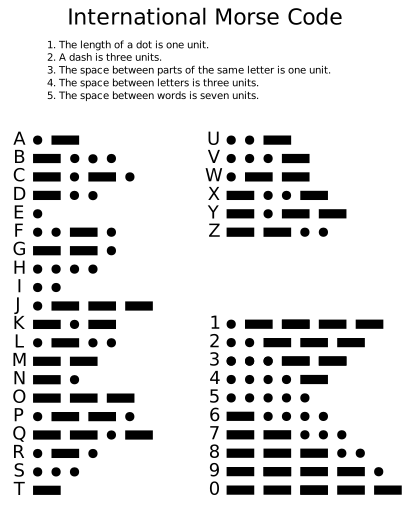

Quelle: Wikipedia
Problem?
- ä,ö,ü
- Westeuropa: å, ô, ÿ
- €
Lösung: “Nimm ein bit mehr”
ISO 8859-1
- a.k.a. Latin 1
- 8 bit pro Zeichen
- verwandt: Windows-1252
Unicode
- Standardisierung von Schriftzeichen
- Definiert Zeichen, deren Codepoint, Normalisierung, Sortierung
UTF-8
- Kann jedes Unicode-Zeichen darstellen
- Ist robust (verzeiht Fehler)
- Text ist (binär) größer als single-byte Encodings (außer ASCII)
- Text ist (binär) kleiner als UTF-16 (für Europäische Sprachen)
- Chinesischer und japanischer Text ist (binär) größer als in UTF-16
Details
ISO8859-1
$ echo -n '<x>süß</x>' | iconv --to iso8859-1 | hexdump -C
00000000  3c 78 3e 73 fc df 3c 2f 78 3e  |<x>s..</x>|
ISO 8859-1
UTF-16
$ echo -n '<x>süß</x>' | iconv --to utf-16 | hexdump -C
00000000  fe ff 00 3c 00 78 00 3e 00 73 00 fc 00 df 00 3c
00000010  00 2f 00 78 00 3e
UTF-16
UTF-8
$ echo -n '<x>süß</x>' | iconv --to utf-8 | hexdump -C
00000000  3c 78 3e 73 c3 bc c3 9f 3c 2f 78 3e  |<x>s....</x>|
UTF-8
Spezialfall €
- UTF-16:
20 AC - UTF-8:
E2 82 AC - Latin1: Nicht im Zeichencodec enthalten!
- Umschreibung in HTML:
€bzw.€ - ISO8859-15 (1999):
A4
- Umschreibung in HTML:
Werkzeuge
Tipp für die Praxis

Platform as a Service
PaaS
Vision

Plattformen ermöglichen Innovation


Workflow
Video courtesy of Matthias Diester
Grundidee
Compile:
\(Buildpack + App = Droplet\)
Start:
\(Droplet + Runtime = Container\)
Services werden dynamisch gebunden.
Buildpack (1)
- Stellt Framework und Runtime für Applikationen bereit
- Untersucht die App auf Abhängigkeiten und bezieht diese
- nodejs:
npm install - Ruby:
bundle install - Static files: Installiert
nginx
- nodejs:
Buildpack (2)
- Konfiguriert die App für gebundene Services
PORTVCAP_SERVICES
- Erkennung läuft automatisch nach
cf push - Kann in
manifest.ymlüberschrieben werden
Buildpacks in CF für:
- Go
- Java
- .NET
- Node.js
- PHP
- Python
- Ruby
- Staticfile
Community Buildpacks
Django, Perl, C++, TomEE, Eclipse Virgo, Jetty, Clojure, Haskell, Python, Zend Server (PHP), Null, JBoss, WebSphere Liberty, Erlang, Elixir, Swift
Empfehlung

Kurs ist kostenlos!
Functions as a Service (FaaS)
Everything is getting more fine-grained
Was heißt das?
Grundgedanke:
Code runs only on-demand, on a per-request basis
Computing wird zur Standard-Handelsware
Serverless is for compute what object storage is for storage
Charakteristik
- Serverless Deployment & Betrieb
- Optimale Ausnutzung der Resourcen (CPU, Memory, Storage)
- Feingranulare Preismodelle
- Skaliert auf Basis einzelner Requests

Welches Problem löst FaaS besser?
Traditionell (1)
Traditionell (2)
Herausforderungen:
- Skalierung
- Wann? (Monitoring)
- Opimierung für? (Speicher, CPU, Antwortzeit, …)
- Wie schnell? (6 Monate, bis der neue Server da ist)
Traditionell (3)
Herausforderungen:
- Robustheit vs. Kosten
- HA => mind. 2 Prozesse pro App “am laufen halten”
- DR: mehrere Regionen
- Kosten fallen immer an (unabhängig vom Grad der Auslastung)
- Ereignisgesteuerte Architektur nicht verbreitet
- Polling => unnütze Requests => Mehrkosten
Wie FaaS skaliert (1)
Wie FaaS skaliert (2)
- Für jeden Request ein Prozess
- Keine Mehrkosten für Robustheit
- es gibt keine LRPs
- Inhärent ereignisgesteuert (event-driven)
- Bezahlt wird nur, was angefordert (requested) wurde
- Auswirkung auf Code
- Höhere Entwicklungsgeschwindigkeit
- Geringere operationale Kosten
FaaS Fallstudie
OpenWhisk
- FaaS Platform, um ereignisgesteuert Code auszuführen
- Open Source (Apache Foundation)
- Managed Service: IBM Cloud Functions
OpenWhisk Architektur (1)

OpenWhisk Architektur (2)

Programmiersprachen

Aufruf-Modelle
High-level Konstrukte

Ereignis-Quellen (1)

Ereignis-Quellen (2)

Granulares Preismodell
- Kosten fallen nur für die Laufzeit einer Action an
- Action nicht aufgerufen? Keine Kosten!
Preismodell (1)
\(p = t \cdot m \cdot \frac{\$0.000017}{GiB \cdot s}\)
| \(p\) | Price |
| \(t\) | Time an action was running |
| \(m\) | Memory allocated to action |
Preismodell (2)

Beispiel
Java-Funktion
Speicherbedarf \(1 GiB\) Laufzeit \(60 s\) Preis pro Aufruf:
\(1GiB \cdot 60s \cdot \frac{\$0.000017}{GiB \cdot s} = \$0.00102\)
Freikontingent (1)
\(400000 \frac{GiB \cdot s}{Monat}\)
Freikontingent (2)
Für das vorherige Beispiel:
\(\frac{400000\frac{GiB \cdot s}{Monat}}{60\frac{GiB \cdot s}{Request}} \approx 6666 \frac{Requests}{Monat}\)
Web Actions
- Volle Kontrolle über HTTP-Interaktionen
- Access an action anonymously without requiring authentication key

Beispiel: HTTP Redirect
Beispiel: Cookie setzen
Beispiel: Bild senden
Einsatzgebiete
Wofür eignet sich FaaS?
- Wechselhafte Lasten
- teilbare Systeme (microservices, anyone?)
- passend für sporadische- als auch Hochlast-Apps
Links
*aaS-Vergleich
Überblick

Functions (FaaS)
Ideal für Apps, die
- zustandslos oder kurzlebig sind
- written in a well-defined set of languages or compiled binary
Beispiele:
- API / Microservice / Web App
- Mobile backend
- Reaktion auf streaming data
- IoT-Ereignisse
Apps (PaaS)
Ideal für Apps, die
- zustandslos sind
- HTTP(s), Web Sockets
Beispiele:
- High-volume Web Apps
- APIs
Containers
Ideal für Apps, die
- langlebig sind
- Alle Protokolle möglich
- als Binärdateien vorliegen oder
- spezielle Betriebssysteme benötigen
Beispiele:
- Game Server
- Verteilte Server (e.g. MongoDB, ZooKeeper)
VMs
Ideal für Apps, die
- Angepaßte Betriebssysteme benötigen
- Komplette Kontrolle über das Betriebssysteme erforderlich
- Hohen Grad an Isolation brauchen
Beispiele:
- Apps mit speziellen Betriebssystemanpassungen
- Apps, die als VM-Abbild paketiert sind
- (Live) Videostreams
On-Premise
Ideal für Apps, die
- Spezielle Hardware benötigen
- Regulierte Branchen (Pharma, etc.)
Beispiele:
- Daten auf dem eigenen Grundstück gespeichert
- Mainframe Apps
That’s it!
Bewertung (1)
Veranstaltungsfeedback
https://pingo.coactum.de/783087
Bewertung (2)
Meta
 rev. aeaa7e6
 built on 2023-12-22 12:22:56
UTC